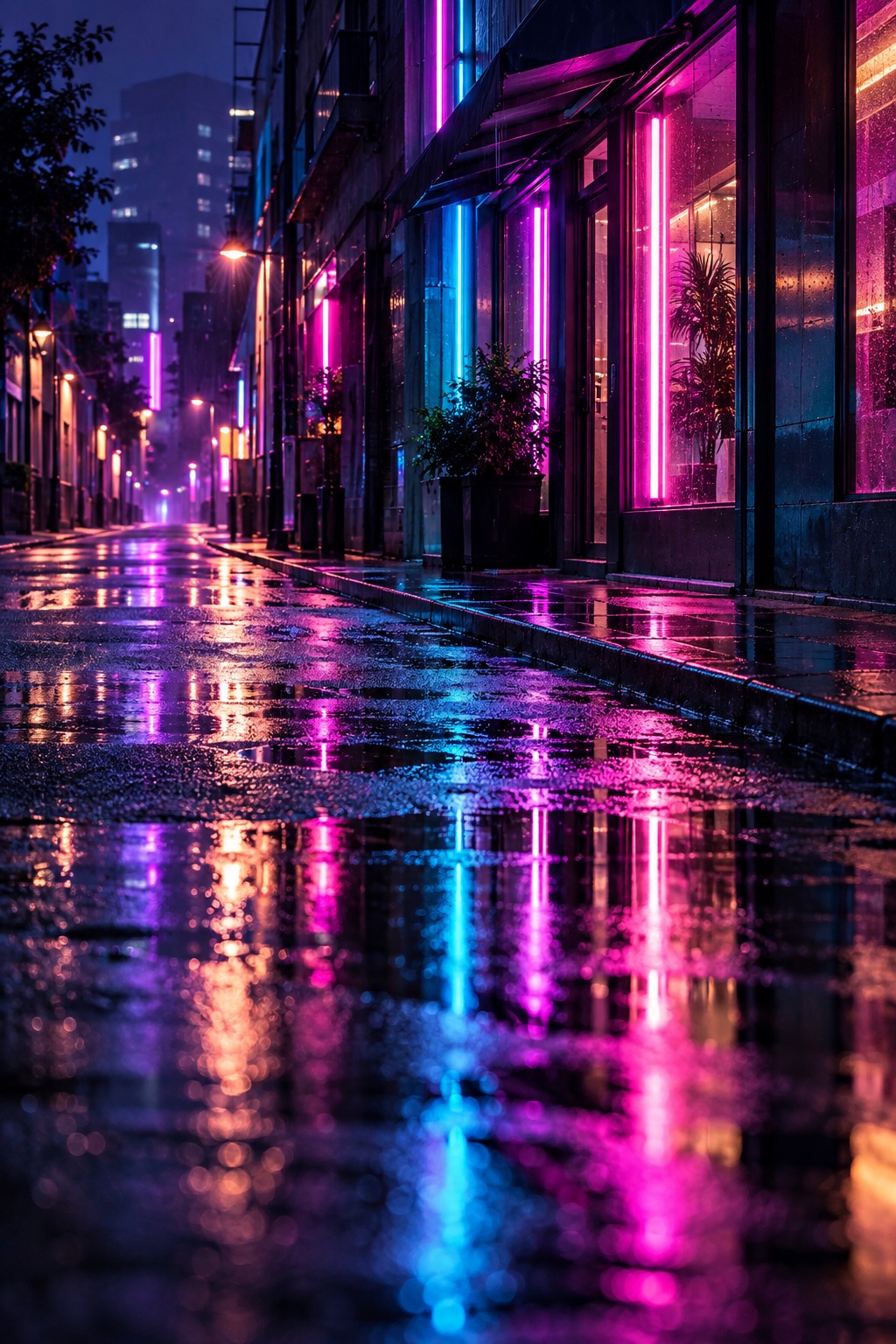
A familiar street can feel completely different after dark. Shop windows become small stages, signs spill colour onto the pavement, and rain turns an ordinary road into a second picture. The subject is still the city, but the mood has changed.
Start with the reflection
Instead of pointing the camera straight at the brightest sign, look down. A puddle can bring together colour, texture and movement in a single frame. Try a lower viewpoint, then move slightly until the reflection sits where you want it. Small changes in position often make more difference than changing the lens.
Let the shadows stay dark
Night photographs do not need to reveal every detail. Dark areas give the light somewhere to land. Pay attention to the brightest parts of the frame and avoid making the whole scene equally bright. The contrast is part of what makes the photograph feel like night.
Wait for one small interruption
A passing umbrella, a bicycle or a ripple in the water can turn a good composition into a more interesting one. Find the frame first, then give the scene time. You are looking for a moment that adds something without making the picture crowded.
An exercise for your next walk
Choose one colour and follow it for twenty minutes. Photograph it in a window, on wet ground and in the distance. Keep the locations simple. The aim is to see how the same colour changes with its surroundings, rather than to collect as many photographs as possible.
THE CONVERSATION
Join the conversation.
Share a thought, ask a question or tell us what caught your eye.